To solve this problem, businesses are increasingly using List to Data AI technologies. List to Data AI refers to the use of artificial intelligence to transform unstructured list-based information into structured datasets. These datasets can then be used for analysis, reporting, automation, and integration with other digital systems.
By converting simple lists into structured data, AI allows organizations to process large volumes of information quickly and accurately. This technology not only improves efficiency but also helps businesses gain valuable insights from their data.
What is List to Data AI?
List to Data AI is a process where artificial intelligence algorithms analyze text-based lists and convert them into structured data formats such as tables, spreadsheets, or databases. Lists are commonly used to record information such as customer contacts, employee List to data records, product details, or survey results. Although the information is clear, it is not structured in a way that allows easy analysis. Using List to Data AI, this list can be transformed into a structured table.
This structured format allows businesses to manage and analyze their data more efficiently.
The Importance of Structured Data
Structured data is essential for modern data-driven organizations. When information is organized in structured formats, it becomes easier to store, search, and analyze.
Structured datasets allow organizations to perform tasks such as filtering information, generating reports, and visualizing data trends. For example, a company may want to analyze employee distribution by country or department. With structured data, this analysis can be completed quickly.
List to Data AI plays a crucial role in transforming unstructured information into structured datasets that support advanced analytics and automation.
Technologies Used in List to Data AI
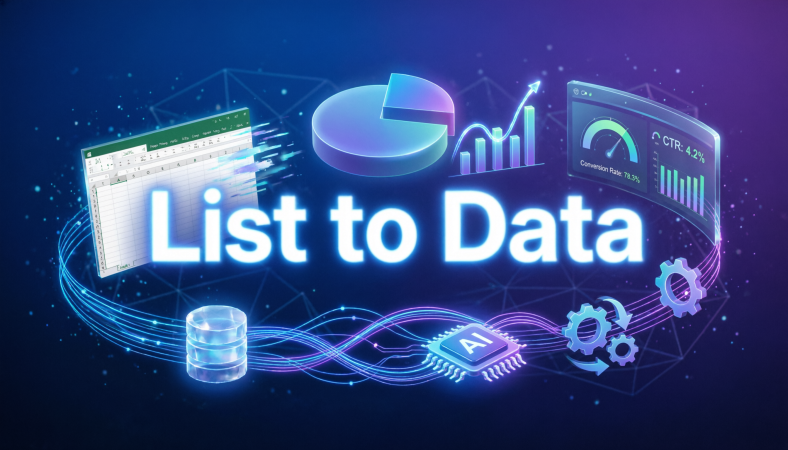
List to Data AI relies on several artificial intelligence technologies that enable machines to understand and process human-readable text.
Natural Language Processing
Natural Language Processing (NLP) is one of the key technologies used in List to Data AI. NLP enables computers to analyze text and identify meaningful elements such as names, locations, dates, and numbers.
For example, NLP can detect:
- Personal names
- Company names
- Job titles
- Email addresses
- Phone numbers
- Geographic locations
By identifying these elements, AI systems can extract useful information from simple lists.
Machine Learning
Machine learning algorithms enable AI systems to learn from existing datasets. As the system processes more examples, it becomes better at recognizing patterns and organizing data accurately.
Machine learning also allows List to Data AI systems to adapt to different list formats and handle complex data structures.
Pattern Recognition
Pattern recognition helps AI identify repeated structures within list entries. For example, if each line follows the pattern:
Name – Job Title – Country
the AI system automatically separates these components and places them into structured columns.
How List to Data AI Works
The process of converting lists into structured data usually involves several stages.
Data Input
The first stage is collecting list-based data from different sources. These sources may include text files, emails, web pages, reports, or spreadsheets.
AI tools can process data from various file formats, including PDF documents and plain text files.
Data Analysis
Once the data is collected, the AI system analyzes the text using Natural Language Processing techniques. During this stage, the system identifies key elements within each list entry.
Data Extraction
After analyzing the text, the AI extracts relevant information such as names, job titles, or locations. These pieces of information are separated from the original list.
Data Structuring
The extracted information is organized into structured columns such as:
- Name
- Job Title
- Company
- Location
- Email Address
The structured dataset can then be exported into spreadsheets or databases.
Data Cleaning
Many AI tools also include data cleaning features that improve the quality of the dataset. These features may remove duplicate records, correct formatting errors, and standardize text fields.
This ensures that the final dataset is accurate and reliable.
Advantages of Using List to Data AI
List to Data AI provides many benefits for organizations that handle large amounts of information.
One major advantage is speed. AI systems can process thousands of records within seconds, which significantly reduces the time required for manual data entry.
Another important advantage is accuracy. Automation reduces human errors such as typos or incorrect formatting.
List to Data AI also improves data organization. Structured datasets make it easier for businesses to manage and analyze their information.
In addition, AI-powered data transformation increases productivity by allowing employees to focus on more strategic tasks rather than repetitive data entry work.
Real-World Applications of List to Data AI
List to Data AI is used in many industries where data organization and analysis are important.
Marketing and Lead Generation
Marketing teams collect large lists of potential customers from websites and online directories. AI tools convert these lists into structured lead databases containing contact details and company information.
E-commerce Businesses
Online stores manage thousands of product listings. List to Data AI helps organize product lists into structured datasets containing product names, categories, prices, and descriptions.
Research and Academic Studies
Researchers often collect large lists of survey responses or experimental results. AI tools convert these lists into datasets that can be analyzed using statistical methods.
Customer Relationship Management
CRM systems require structured data to track customer interactions and sales activities. List to Data AI helps convert raw customer lists into organized records.
Human Resource Management
HR departments use List to Data AI to organize employee records and recruitment lists into structured databases.
Challenges of List to Data AI
Despite its advantages, List to Data AI also has some challenges. One common issue is inconsistent formatting in lists. If list entries follow different structures, AI systems may require additional processing to extract information accurately.
Another challenge is data quality. If the original data contains errors or missing information, the final dataset may require manual review.
Organizations must also consider privacy and security when handling sensitive data.
Future of List to Data AI
The future of List to Data AI is very promising as artificial intelligence technologies continue to advance. Future systems may be able to process and structure data in real time.
Advanced AI models will also be capable of understanding more complex data structures and integrating seamlessly with cloud-based analytics platforms.
As businesses continue to generate large amounts of data, the demand for automated data transformation solutions will continue to grow.
Conclusion
List to Data AI is transforming the way organizations manage information. By converting simple lists into structured datasets, artificial intelligence allows businesses to process data faster, improve accuracy, and make better decisions.
From marketing and e-commerce to research and human resource management, List to Data AI provides a powerful solution for organizing and analyzing large amounts of information. As AI technology continues to evolve, this approach will play an increasingly important role in modern data management.